






- October 24, 2026
- Miscellaneous
IMC 2026 Takeaways Every Small Business Should Know About 5G and Digital Fraud
IMC 2026 Takeaways Every Small Business Should Know About 5G and Digital Fraud
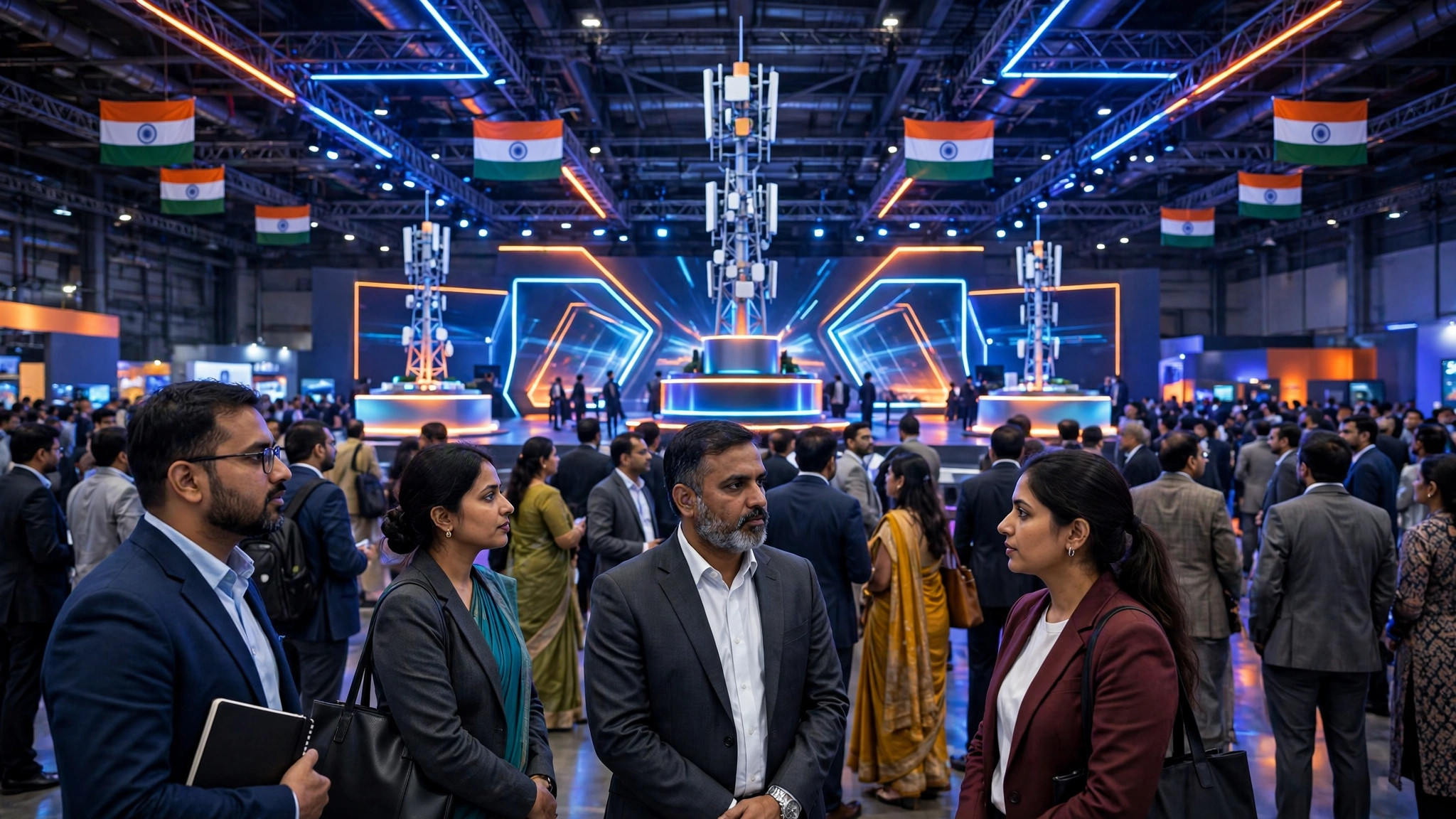
The 10th India Mobile Congress (IMC 2026) was inaugurated on 8 October 2026 at Yashobhoomi in New Delhi by Prime Minister Narendra Modi, under the theme "Scale Without Boundaries". The announcements covered pan-India 5G coverage, a call for a global mechanism to curb digital fraud and deepfakes, and a package of telecom reforms. These are not abstract policy headlines — they change the infrastructure on which every small business sells, advertises and protects itself. Here is what the event means for an MSME owner in practical terms.
The Short Answer
At IMC 2026, inaugurated on 8 October 2026 at Yashobhoomi, New Delhi, the Prime Minister announced that 5G has reached every district through more than 5.5 lakh base stations, with mobile internet speeds up tenfold compared to 2022. He called on governments, tech companies and global telecom bodies including the GSMA to create a global mechanism to curb digital frauds and deepfakes, noting that a person sitting in one country can commit a crime in a third country. He highlighted that ₹50 lakh crore in direct benefit transfers had reached beneficiaries' bank accounts linked to mobile phones, saving about ₹5 lakh crore in prevented leakages, with PM-KISAN transfers exceeding ₹4 lakh crore. He also flagged that over 500 million Indians are connected to gaming, with Tier-2 and Tier-3 youth increasingly active in gaming, e-sports and content creation. Telecom reforms announced include the modernisation of decades-old laws through the Telecommunications Act, rationalisation of AGR and bank-guarantee burdens, and the GatiShakti Sanchar Portal speeding up right-of-way approvals. The event was organised by the Department of Telecommunications and COAI, and India also hosted the GSMA Board meeting this year.
5G in Every District — and Tenfold Faster Speeds
The headline infrastructure announcement: 5G has reached every district in India via more than 5.5 lakh base stations, and mobile internet speeds have increased tenfold compared to 2022. For a small business, the significance is not the technology label but what it enables at the edges of the network.
Pan-India 5G with sharply higher speeds means video-based selling is now viable from small towns, not just metros. Live commerce sessions, product demonstration videos, video catalogues on WhatsApp Business, and virtual showroom tours no longer depend on the customer having metro-grade connectivity. If your business has been postponing a video strategy because "our customers won't have the bandwidth", that assumption needs revisiting. A saree seller in a Tier-3 town can now run a live sale to customers anywhere in the country with the same connection quality both sides expect.
A Global Call Against Digital Fraud and Deepfakes
The Prime Minister called on governments, tech companies and global telecom organisations — including the GSMA — to create a global mechanism to curb digital frauds and deepfakes. His reasoning was blunt: in a connected world, a person sitting in one country can commit a crime in a third country, and no single country can fight that alone.
For a small business, this is not a diplomatic talking point; it is a warning to secure your own digital front door now, before the frameworks catch up. Fraud targeting small businesses is rising — fake UPI collect requests, impersonation of business accounts on WhatsApp, and deepfake videos misused for scams. The IMC message is that this is now a recognised global-scale problem, which means enforcement and platform-level defences will keep tightening. Businesses that secure their UPI handles, verify their WhatsApp Business accounts and train their staff early will be ahead of the curve. Our guide to UPI Tap and Pay and MyUPI covers the newer payment features shop owners should understand, and our UPI safety habits for families lays out the PIN and call-verification discipline every household and small team needs.
₹50 Lakh Crore of DBT — Proof That Digital Scale Works
The Prime Minister highlighted the scale of Direct Benefit Transfer: ₹50 lakh crore has reached beneficiaries' bank accounts linked to mobile phones, with savings of about ₹5 lakh crore from prevented leakages, and PM-KISAN transfers alone exceeding ₹4 lakh crore.
Why should a shop owner care about DBT numbers? Because they are the strongest evidence available that digital payments have reached the last mile. ₹50 lakh crore moving through mobile-linked bank accounts means your customers — including rural and semi-urban customers — are already comfortable receiving and spending money digitally. The audience for digital selling is not a future projection; it is the present. Every DBT recipient is a person whose bank account is active, whose phone is linked, and who has learned to trust a digital transaction. That is your customer base, already onboarded.
500 Million Gamers — the Tier-2 and Tier-3 Creator Surge
Another striking figure from the event: more than 500 million Indians are connected to gaming, with youth in Tier-2 and Tier-3 towns increasingly active in gaming, e-sports and content creation. The Prime Minister described the mobile phone as having become both a gaming console and a creation studio.
For small businesses, the opportunity is in marketing, not in gaming itself. The creator economy is no longer concentrated in Delhi, Mumbai and Bengaluru. Young content creators in smaller towns — with authentic local audiences and far lower collaboration costs than metro influencers — are exactly the micro-influencers a small brand can afford. A regional food brand, a local fashion label or a district-level service business can partner with creators who speak the customer's language, literally. If you have never considered influencer marketing because it looked like a big-brand game, the Tier-2 and Tier-3 creator surge is your entry point.
Telecom Reforms: What Changed in the Rules
Beyond the headline announcements, the event flagged a reform package for the telecom sector itself. Decades-old laws have been modernised through the Telecommunications Act. Work is underway on rationalising the AGR (Adjusted Gross Revenue) and bank-guarantee burdens on operators. And the GatiShakti Sanchar Portal is speeding up right-of-way approvals — the permissions needed to lay fibre and erect towers.
The practical read for a business owner: these reforms lower the cost and friction of building network infrastructure, which over time means better connectivity reaching more places at lower cost. Right-of-way approvals were one of the quiet bottlenecks in India's broadband rollout; a portal that speeds them up directly translates into fibre reaching industrial areas, market clusters and small towns sooner. It is the kind of reform whose benefits arrive gradually — but they arrive.
The event itself was organised by the Department of Telecommunications and COAI (the Cellular Operators Association of India), and India also hosted the GSMA Board meeting this year — a signal of the country's growing weight in global telecom decision-making.
What Your Business Should Do This Quarter
Turn the IMC signals into actions:
- Start or expand video selling. With 5G in every district and tenfold speed gains since 2022, test one live commerce session or a short product-demo video series this quarter. Measure conversion against your text-and-photo baseline.
- Harden your payment touchpoints. The global fraud-framework push is a cue: verify your UPI handles, secure your WhatsApp Business account, and set a rule that no payment instruction is ever accepted over a call without callback verification.
- Recruit one Tier-2 or Tier-3 micro-influencer. Find a local creator whose audience matches your customers and trial a single collaboration. Authentic local reach beats polished metro advertising for most small budgets.
- Assume your customers are digitally ready. ₹50 lakh crore of DBT through mobile-linked accounts means the onboarding work is done. Stop designing your sales process for an offline-only customer who increasingly does not exist.
- Watch the fraud-regulation space. As global anti-fraud mechanisms develop, expect tighter platform rules on business accounts and advertising. Compliant, verified accounts will have the smoothest experience.
Frequently Asked Questions
When and where was IMC 2026 held?
The 10th India Mobile Congress was inaugurated on 8 October 2026 at Yashobhoomi in New Delhi by Prime Minister Narendra Modi, under the theme "Scale Without Boundaries". It was organised by the Department of Telecommunications and COAI.
What did the PM announce about 5G?
He announced that 5G has reached every district through more than 5.5 lakh base stations, and that mobile internet speeds have increased tenfold compared to 2022.
What is the proposed global mechanism against digital fraud?
The PM called on governments, tech companies and global telecom bodies including the GSMA to create a global mechanism to curb digital frauds and deepfakes, arguing that cross-border digital crime cannot be fought by any single country alone.
How does IMC 2026 matter for a small business?
Pan-India 5G makes video and live selling viable from small towns; the DBT scale proves customers are digitally ready; the Tier-2/3 creator surge opens affordable influencer marketing; and the fraud push is a cue to secure your own UPI and business accounts now.
Sources
- DD India — "5G reaches every district, over 5.5 lakh base stations operational: PM Modi" (8 Oct 2026, 12:02 PM IST) — https://ddindia.co.in/2026/10/5g-reaches-every-district-over-5-5-lakh-base-stations-operational-pm-modi/
- The Hindu BusinessLine — "IMC 2026: Prime Minister Modi urges for global framework to curb digital frauds" (8 Oct 2026, 07:58) — https://www.thehindubusinessline.com/news/imc-2026-prime-minister-modi-urges-for-global-framework-to-curb-digital-frauds/article71558660.ece/amp/
Infrastructure is only half the story — your business needs a digital presence ready to use it. Ready Multi Service builds professional websites and digital systems for small businesses, so pan-India 5G reaches customers who can actually find you online.